
Heat and drift
Two ways a conversation gets away from you
It gets hot and you lose control. Or it stays perfectly pleasant, goes nowhere, and you lose it anyway. One four step method for both.
It gets hot and you lose control. Or it stays perfectly pleasant, goes nowhere, and you lose it anyway. One four step method for both.
Every difficult conversation goes wrong in one of two ways. It turns hostile, and you spend the call managing pressure. Or it stays friendly and quietly goes nowhere. Both are the same failure underneath, which is that you are no longer deciding where the conversation goes next. Most training prepares you for the loud one and leaves you to work out the quiet one alone.
A customer is furious about a charge. A buyer objects on price and will not move off it. The pushback announces itself, and the rep knows the moment it starts. This is the failure every training program prepares you for, and the one you can at least see coming.
A customer is friendly and will not get to the point. A buyer agrees with every word and signs nothing. The rep hangs up with no conflict to report and nothing resolved, which is exactly why nobody trains for it, why it never shows up in a metric, and why it costs deals and hours nobody accounts for.
The same move reverses depending on which condition you are in. Nearly every competing book teaches open questions and generous acknowledgment as universal goods. Under drift, both make it worse.
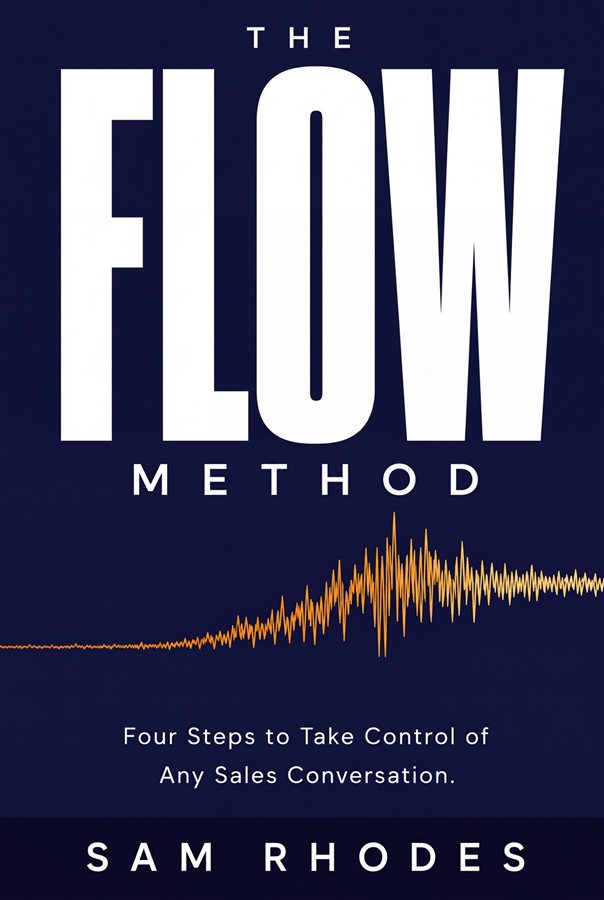
Four Steps to Take Control of Any Sales Conversation.
Control of a sales conversation is not about talking more or pushing harder. It is knowing, at every turn, whether you or the buyer is deciding what happens next. FLOW gives the rep four moves to take that decision back, whether the buyer is objecting on price or agreeing with everything and signing nothing.
| Move | Under resistance | Under drift |
|---|---|---|
| Focus | Listen past the stated objection to the real one | Listen for what is missing, not what is said |
| Legitimize | Validate the objection without conceding it is fatal | Validate the person, never the agreement |
| Offer | Say their situation back with something in it they did not say | State the decision in front of them, not more material |
| Work forward | Open question, to surface the unsaid | Closed question, to force a position |
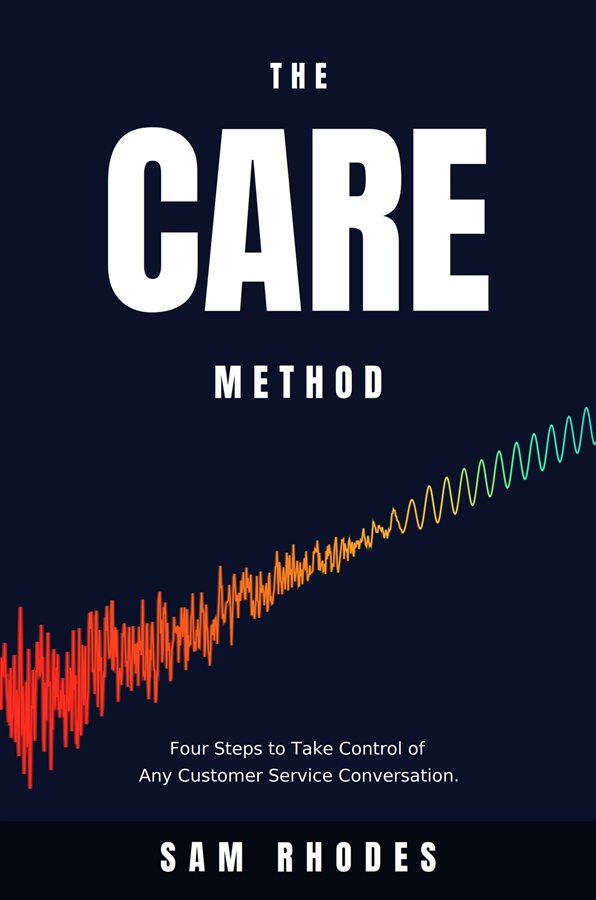
Four Steps to Take Control of Any Customer Service Conversation.
Control of a service call is not about staying calm while the customer talks. It is deciding where the call goes next instead of following wherever it leads. CARE gives the rep four moves to do that, whether the customer is furious about a charge or perfectly pleasant and eight minutes into a thirty second issue.
| Move | Under heat | Under drift |
|---|---|---|
| Concentrate | Listen for the feeling underneath the facts | Listen for the one fact buried in the story |
| Acknowledge | Validate the emotion, it calms | Validate the person, not the topic |
| Respond | Answer with clarity and confidence | Answer briefly, and close the door behind you |
| Explore | Open questions, to surface what is unsaid | Closed questions, to narrow and land it |
You will finish with words you can actually say, not advice to stay calm and be empathetic. Named moves for the call that turns hostile, and for the one that will not end. You will be able to tell which one you are in, and know what your next move is.
Named techniques are coachable techniques. You can point at the exact move someone missed instead of telling them to build rapport. Every chapter ends with a small assignment you can hand to one person after a call.
Every scenario is written from both sides, what the customer wants and what the rep can actually offer, so it lifts off the page into a role play without you having to invent the other half. The scenarios are composites, not transcripts.
The trainer deck for CARE, and the trainer deck for FLOW, both ready to run in ninety minutes with speaker notes included. Practice Cards for both books, the two sides separated and the resolution removed. Leave your name and email and we will send the pack.